
THE SHORT VERSION
What you’ll take away.
- Read an institution together with its powers, limits, and accountability.
- Use notes to recall a concept after understanding it in a reliable source.
- The older linked file was described as sixth-edition material, not a verified latest edition.
- Build comparison tables around differences a question might test.
- Keep a separate list for amendments and other dated developments.
Polity becomes easier to revise when you understand how its parts relate. When you study an institution, ask who creates it, what it can do, what limits it, and how it is held accountable.
A short note should help you reconstruct that explanation. If it only gives you a list of article numbers, you may recognise the terms without understanding the question.
The older handwritten PDF
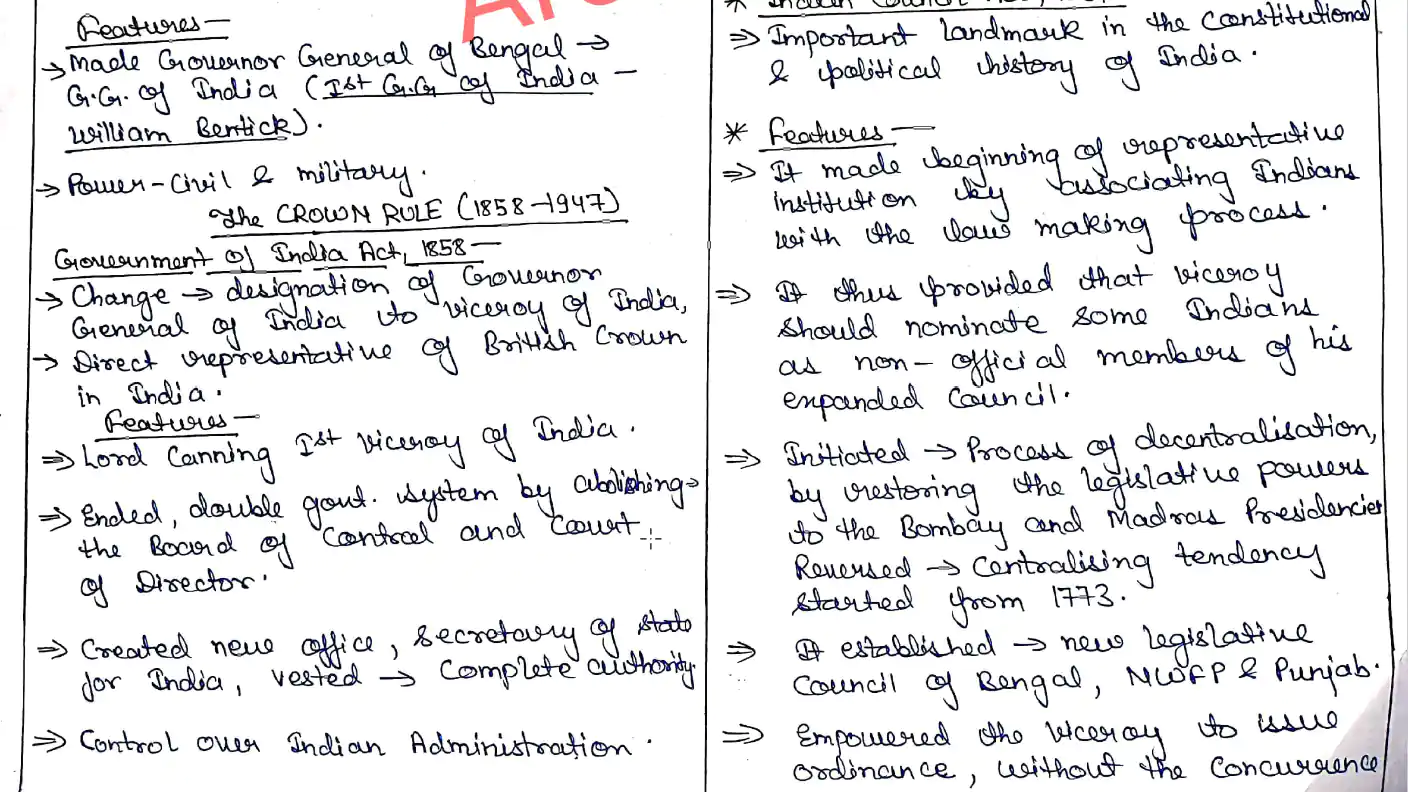
You can open the previously linked handwritten notes. The earlier version of this page described the file as English notes based on the sixth edition of M. Laxmikanth’s Indian Polity.
The file’s availability and contents have not been revalidated. Do not treat it as the latest edition or assume that its chapter count, file size, or treatment of recent changes is current. Check the cover, contents, and date before studying from it.
For primary constitutional text, use the Legislative Department’s Constitution of India page. For introductory explanations, select an appropriate civics or political-science book in the NCERT catalogue.
Read connected topics together
Begin with the Constitution’s basic ideas and then connect rights, government institutions, federal arrangements, and local government. When your book refers to another chapter, note the connection rather than treating each chapter as a separate list.
For example, your notes on Parliament can point to the executive, legislation, and financial accountability. A question may ask how those relationships work, even when its wording mentions only one institution.
If you prefer Hindi, our Polity and Governance notes in Hindi explain the Parliament–Council of Ministers relationship and distinguish transparency from accountability, with questions to test your understanding.
Our Prelims resource guide will help you keep the reading list manageable.
Make a comparison that reveals a difference
Try this format when you revise two institutions:
| Question to answer | Institution A | Institution B |
|---|---|---|
| How is it constituted? | Record the relevant rule | Record the relevant rule |
| What is its main function? | Explain it in one sentence | Explain it in one sentence |
| What limits its authority? | Note the important limitation | Note the important limitation |
| What might you confuse? | Write the distinction in your own words | Check the distinction against your source |
Fill the cells from the relevant text. Leaving an uncertain cell blank until you verify it is more useful than copying an unexplained claim into your permanent notes.
Connect a provision with its purpose
Consider a basic distinction: having a power and being accountable for its use are separate ideas. When you read that an institution can take a decision, look for the process and checks surrounding that power.
This gives your Mains notes a useful structure: the arrangement, its purpose, a limitation, and an example. You can practise this using our answer-writing guide.
Keep updates visible
Create a small “check for changes” section beside the relevant chapter. Record the exact source and date when you add a constitutional amendment, official rule change, or important decision.
Avoid silently replacing the old statement while losing the historical context. A past-paper question belongs to its examination year; current guidance must use the applicable position.
Practice question: improve a weak note
Original practice question: Your note says, “Institution X is important and has many powers.” What would make it useful for revision?
Answer: Identify how X is constituted, state its principal function, explain a limit or accountability mechanism, and distinguish it from a related institution. The original sentence offers no detail you can apply to a question.
You do not need a longer paragraph full of praise. You need a clearer explanation that you can recall.
Finish a study session by closing the book and explaining one institution aloud. Then attempt a relevant previous-year question. The part you cannot explain is the part to revise next.
Sources and information checks
Source information checked: . For a new application or exam cycle, also read the applicable official notice.
- Legislative Department: Constitution of India
- NCERT: official textbooks
- UPSC: previous-year question papers
This article was prepared or revised with AI assistance. Read our editorial policy.
JOIN THE CONVERSATION
Comments
Have a question or something to add? Comments are moderated and appear here only after approval.
JavaScript is required to submit a comment. Published comments above remain available to read.
No approved comments yet. Be the first to join the conversation.